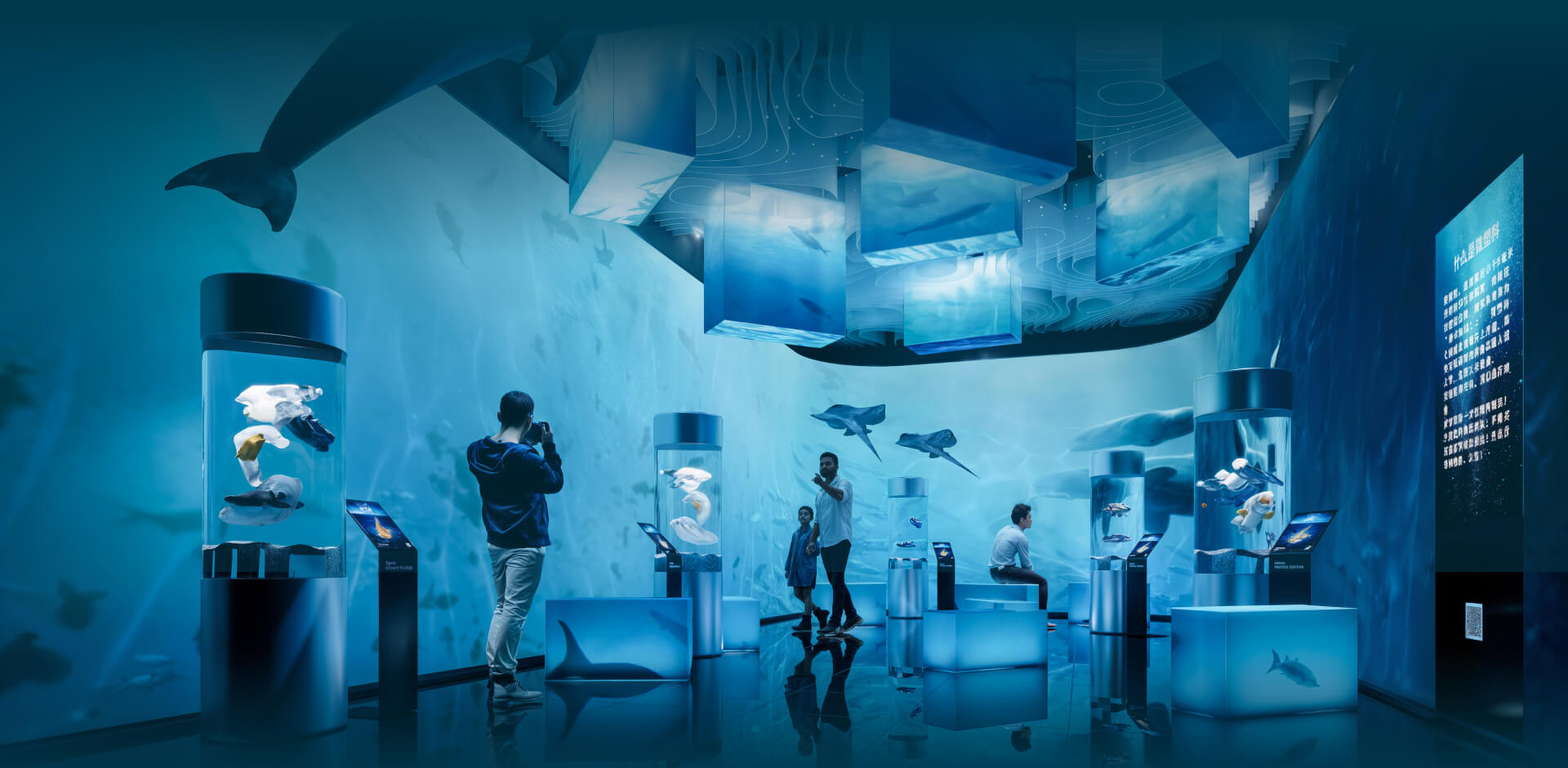
Acrylic Viewing Panels for Large Aquariums: Flat, Curved and Panoramic Design Guide


Acrylic viewing panels are the visual heart of a large aquarium. They decide how close visitors feel to the underwater world, how the tank connects with the building, and how safely the water load is transferred into the surrounding structure.
Editorial note: This article is written for architects, aquarium designers, contractors, developers, and procurement teams. It explains planning considerations for acrylic viewing panels but does not replace project-specific structural calculations.
What Is an Acrylic Viewing Panel?
An acrylic viewing panel is a transparent structural panel used to create a viewing surface for aquariums, aquatic habitats, pools, and underwater architectural spaces. In large projects, the panel is not only a transparent wall. It must be coordinated with water depth, supporting frames, waterproofing details, visitor sightlines, and the surrounding building structure.
The best panel design begins with the viewing experience. A long flat panel can create a cinematic ocean window. A curved panel can soften the transition between spaces and increase immersion. A panoramic panel can make the aquarium feel like part of the architecture rather than a separate object.
Flat Acrylic Panels: Best for Clean Architectural Viewing Windows
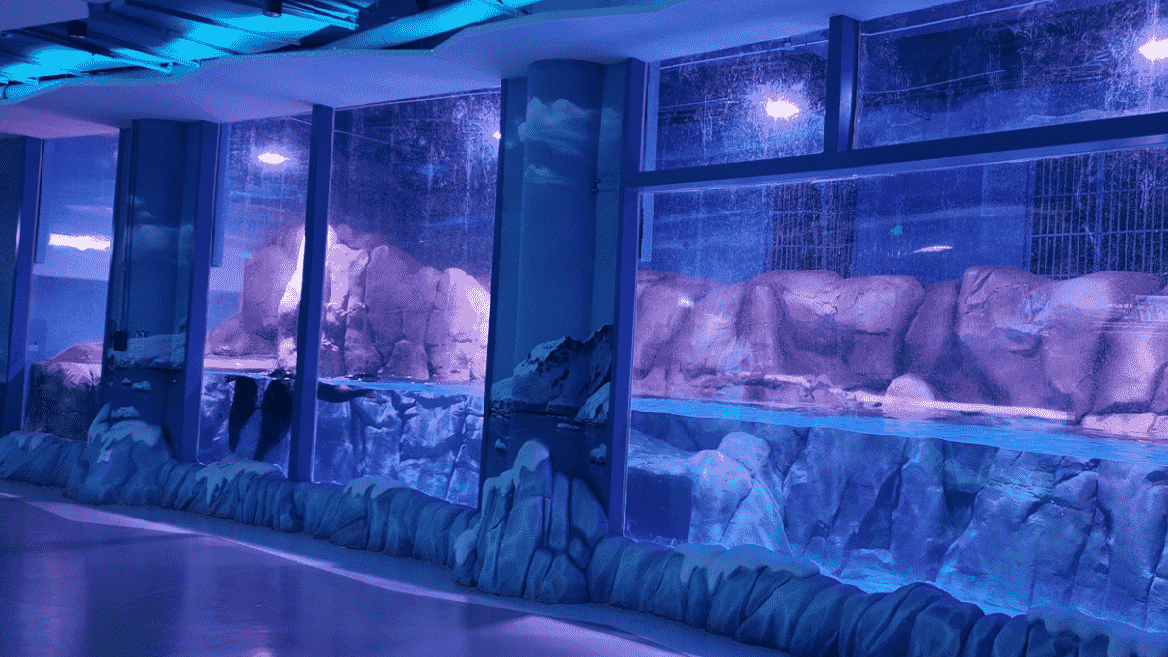
Flat acrylic panels are often selected when the project needs a strong, clear viewing surface with simple architectural geometry. They work well for public aquarium windows, hotel lobby aquariums, private mansion marine displays, and museum exhibits where the tank is viewed mainly from one direction.
The main advantage of a flat acrylic panel is visual discipline. It gives designers a clean framed view, keeps interior lines orderly, and makes it easier to align the tank with walls, floors, and ceilings. For engineering teams, flat panels can also make structural coordination more direct because the support edges and waterproofing interfaces are easier to define.
Curved Acrylic Panels: Best for Immersive and Premium Spaces
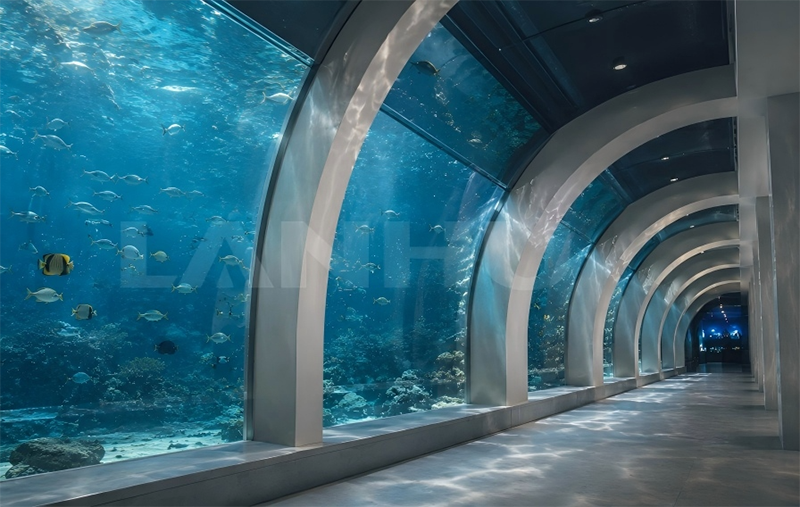
Curved acrylic panels are used when a project needs a softer, more immersive viewing effect. A curved surface can guide visitors around the aquarium and make the underwater scene feel continuous. This is especially useful for commercial spaces, themed restaurants, luxury residences, and public exhibits where the aquarium becomes part of the movement path.
Curved panels require more careful planning than flat panels. The radius, forming process, edge finishing, optical distortion control, and installation tolerance all influence the final appearance. Buyers should avoid choosing curved acrylic only for visual novelty. It should support the room geometry, viewing angle, and visitor flow.
Lanhu’s acrylic viewing panel category includes flat acrylic panels, curved acrylic panels, and panoramic curved viewing aquarium products, which makes it a relevant landing page for this topic.
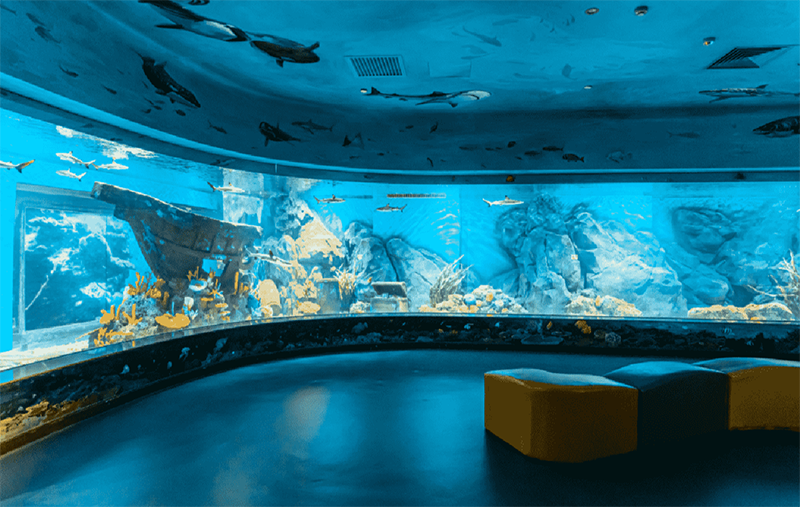
Panoramic Acrylic Viewing: When the Aquarium Becomes Architecture
Panoramic viewing is not simply a larger window. It is a design method that uses acrylic surfaces to make the aquarium feel integrated with the surrounding space. In a public aquarium, this may mean a wide viewing wall that supports crowd movement. In a hotel or restaurant, it may mean a curved surface that becomes the emotional center of the interior.
For panoramic aquarium design, the team should consider three questions:
Where will visitors first see the aquarium?
How long will they stay in front of the viewing surface?
Will the panel support education, dining, retail traffic, residence value, or destination branding?
When these questions are answered early, the acrylic panel becomes part of the project strategy rather than a late-stage material selection.
Thickness Is Important, But It Is Not the Only Decision
Many buyers ask about acrylic thickness first. Thickness matters, but it should be calculated together with water depth, panel span, support method, installation condition, and safety requirements. A thicker panel is not automatically the best solution if the surrounding structure, access route, or bonding details are not properly designed.
For large aquarium projects, panel planning should include optical clarity, structural behavior, edge finishing, machining accuracy, bonding quality, annealing, transportation protection, and site installation. Lanhu states that its acrylic capability covers various panels from 20 mm to 800 mm, and its acrylic page shows processes such as material preparation, polymerization, CNC machining, lamination, thermal forming, mirror polishing, quality control, packaging, and shipment preparation.
Key Information to Confirm Before Panel Design
Before confirming an acrylic viewing panel, the project team should gather clear information. Missing early information often leads to repeated revisions, unclear quotations, or installation conflicts.
Water depth and expected water pressure conditions
Visible viewing area and total acrylic dimensions
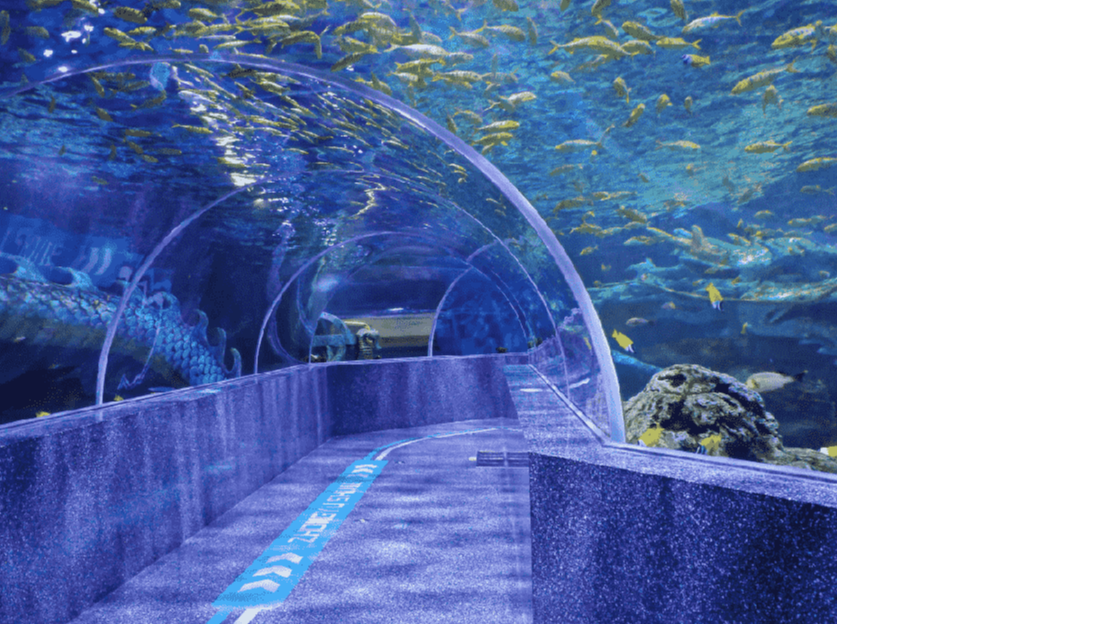
Flat, curved, cylinder, tunnel, or custom form
Supporting structure and waterproofing interface
Access route for transportation and lifting
Finishing expectations for edges, joints, and frames
Maintenance access and cleaning method
How Viewing Panels Connect With Life Support and Habitat Design
A viewing panel cannot be planned separately from the biological system. The visitor sees a clear acrylic window, but behind it there must be water circulation, filtration, lighting, animal habitat, temperature control, and daily maintenance access. If the visual panel is designed without enough space for life support equipment, the final project may look beautiful but become difficult to operate.
For buyers who need both acrylic structures and aquatic habitat coordination, Lanhu’s one-stop aquarium engineering solutions are relevant because the service scope includes design, construction, life support system installation, commissioning, and operation support.
Common Mistakes to Avoid
Choosing the lowest panel quotation without checking engineering scope.
Using a flat panel where a curved panel would better match visitor circulation.
Choosing a curved panel without confirming optical and installation tolerances.
Discussing thickness before water depth and support conditions are clear.
Ignoring packaging, shipping, and lifting requirements until late in the project.
Separating acrylic design from life support system planning.
Conclusion
Acrylic viewing panels determine both the visual success and structural reliability of large aquarium projects. Flat panels are ideal for clean viewing windows, curved panels create a more immersive experience, and panoramic panels help the aquarium become part of the architecture. The best result comes from aligning panel form, water depth, visitor experience, manufacturing quality, and installation planning from the start.
FAQs
Are acrylic panels better than glass for large aquariums?
Acrylic is often preferred for large custom aquarium structures because it offers high optical clarity, design flexibility, and strong performance when engineered for the correct water depth and support conditions.
What is a curved acrylic panel used for?
A curved acrylic panel is used to create immersive viewing surfaces for aquariums, underwater restaurants, hotel attractions, luxury residences, and themed exhibits.
How is acrylic panel thickness decided?
Acrylic panel thickness is decided by engineering review. Water depth, panel size, span, support method, safety requirements, and installation conditions all need to be considered.
Can acrylic panels be used for both aquariums and pools?
Yes. Acrylic panels can be used for aquariums, acrylic pool walls, transparent pool bottoms, koi ponds, and other underwater viewing structures when designed for the specific load and installation conditions.